Stop heating the sky.
Most flat roofs in South Yorkshire have shockingly little insulation — and you pay for it every winter. A warm roof upgrade adds non-combustible PIR insulation above the deck, meets current Building Regs, and cuts heat loss by up to 80%.
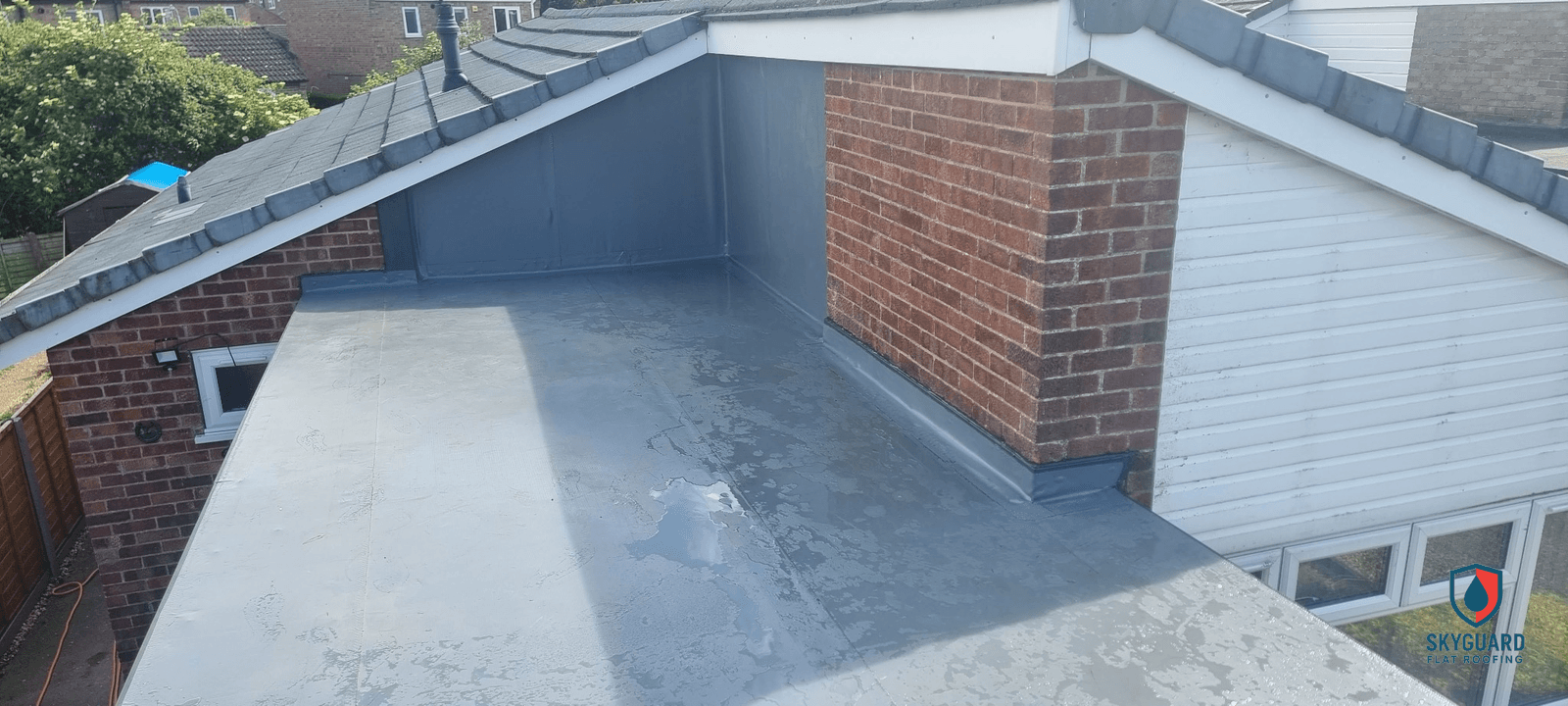
Six reasons it’s a no-brainer.
A warm roof costs a fraction of the rest of the replacement and pays back faster than you'd think.
Lower heating bills
A properly insulated warm roof can cut heat loss through the roof by 70–80%. You feel the difference within a week.
Meets Building Regs
Current regs require a U-value of 0.18 W/m²K on roof replacements. Warm roof construction is how we hit it.
Non-combustible PIR
Class A1 fire-rated PIR insulation — safe, code-compliant, won't contribute to fire spread.
No interior disruption
All the work happens on the roof. Your ceiling, lights, and plasterboard below stay untouched.
Kills condensation
Cold roofs sweat — warm roofs don't. A warm-roof upgrade often solves the damp / black-mould problem people thought was a leak.
Pairs with single ply
A warm roof needs a flexible, watertight outer membrane. Single ply is built for it. The two systems are made for each other.
Same building — very different bill.
- • Insulation between ceiling joists
- • Cold deck sweats — condensation, mould
- • Typical U-value 0.5–1.0 W/m²K (poor)
- • Common in pre-2010 felt roofs
- • Heat escapes through every joist
- • Insulation above structural deck
- • No cold surfaces — no condensation
- • Hits 0.18 W/m²K Building Regs standard
- • Required on most replacements today
- • Pairs perfectly with single ply membrane
Warm roof questions
Insulation, Building Regs, and heating bills.
What is a "warm roof"?
How much does it cost?
Do I need it?
Will it raise the roof height?
Can you upgrade my existing roof without a full replacement?
Is the insulation safe?
Free survey · No hard sell · Transparent pricing
Ready when you are.
Speak to a real roofer in 30 seconds — or get a transparent price range in 60.